
Which safety shoe suits your work in installation engineering?
12 February 2026Safety shoes for installers: what should you look out for?
Installation engineering is all about designing, installing, maintaining and repairing technical systems. Think of heating, ventilation, electrical installations, plumbing and sustainable energy systems. Many different professionals work in this sector, such as installation engineers, service technicians, HVAC specialists, electricians, panel builders and maintenance engineers. Work planners and project managers are also part of this field.
What all these professions have in common is that you move a lot, frequently change posture and work in constantly changing conditions. One day you’re indoors with dry installations, the next day you’re outside on a construction site, on a ladder or in a crawl space. That calls for safety shoes that truly match what you do. That’s why there is no single “best” safety shoe for installation engineering. The right choice depends on your working day, your environment and the risks involved. Do you mainly work indoors in dry conditions? Then a lighter model with S1P(S) certification may be ideal. Do you often work outdoors or on construction sites? Then a water-resistant S3(S) shoe offers extra security.
Below, we list the key features of good safety shoes for installation engineering. This makes it easier to choose the safety shoe that suits you best.
Electrical safety: antistatic and ESD
Do you work with electrical installations or sensitive equipment? Then electrical safety is essential. Almost all modern safety shoes are antistatic. This means that built-up static electricity is discharged through the shoe, preventing shocks. Do you work with sensitive electronics, microchips or in environments where sparking poses a risk? Then a shoe with ESD protection is recommended. ESD shoes provide controlled discharge of electrical charge between you and the ground. This protects both you and the equipment you are working with.
Metal-free working: lighter and more practical
Many installers nowadays choose metal-free safety shoes. Not because steel is unsafe, but because modern alternatives can be smarter in use. Metal-free shoes feature a composite toe cap and a non-metal anti-perforation midsole. This often makes the shoe lighter and more comfortable, especially if you walk or kneel a lot. For work in ESD environments, metal-free is often a logical choice as well.
Grip: safe footing on any surface
Good grip is indispensable in installation engineering. You work on smooth floors, wet surfaces, concrete, tiles or steel. The outsole of your safety shoe makes the difference here. Just like car tyres have different tread patterns, safety shoes are equipped with soles designed for specific working conditions. When choosing, look not only at slip resistance (SR), but also at how the sole behaves when turning, walking and standing.
Ladder grip: safety at height
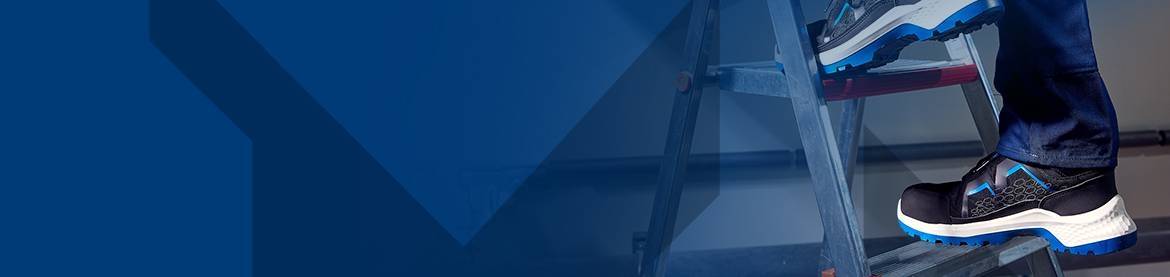
Do you regularly work on ladders or scaffolding? Then ladder grip is an important point of attention. Shoes with a clearly defined heel offer more stability and grip on ladder rungs. This feels more secure and reduces the risk of slipping, especially when working at height.
Protection for kneeling work: scuff cap
A lot of installation work takes place close to the ground. If you kneel often, the toe area of your shoe takes a lot of wear. A scuff cap protects this vulnerable part of the shoe. The result: less wear, a longer lifespan and shoes that stay safe and presentable for longer.
Indoors or outdoors? Think about water resistance
Do you mainly work outdoors, for example installing solar panels, heat pumps or piping? Then it’s wise to choose a shoe that keeps water out. Safety shoes with S3 or S3S certification have a water-resistant upper that keeps your feet dry in rain or wet conditions. Do you mostly work indoors? Then a lighter S1P(S), sportier model with more ventilation may be more comfortable.
OUR TOP 5 SHOES FOR INSTALLATION ENGINEERING
 |
|
E-BOUNCE S3S Black-orange |
 |
|
Crossforce Fly high |
 |
|
Everon 2.0 DISC |
 |
| E-BOUNCE S1PS White-lime Sporty, lightweight and ideal for dry indoor environments. This metal-free E-BOUNCE S1PS White-lime offers ESD protection and a flexible fit. Perfect for installation work in technical rooms, workshops and utility buildings. . |
 |
|
Boston |