

How do you prevent sore feet in your safety shoes?
How do sore feet develop at work?
Sore feet usually do not have a single cause. In most cases it is the result of prolonged strain during work. You stand a lot, walk long distances and repeat the same movements over and over again. At the same time, you work on different surfaces such as concrete, asphalt or uneven floors. This demands a lot from your feet, every single day.
As a result of this strain, different complaints can occur. Common causes of sore or tired feet include:
• Insufficient support
• Friction caused by heat and moisture
• Pressure points inside the shoe
These factors cause your feet to work harder, making them more likely to become tired or painful.


Signs of overworked feet
Foot complaints often develop gradually. You may not notice them immediately, but your body will send signals. For example:
- Your shoes feel comfortable in the morning, but heavy later in the day
- Your feet burn or tingle after work
- You feel less stable while standing
- You notice that you start walking differently
These are signs that your feet could benefit from more support.
Good to know: sore feet develop differently for everyone. Sometimes a small adjustment to your shoe is already enough. If that does not help, you will probably need additional support.
Start with your work socks
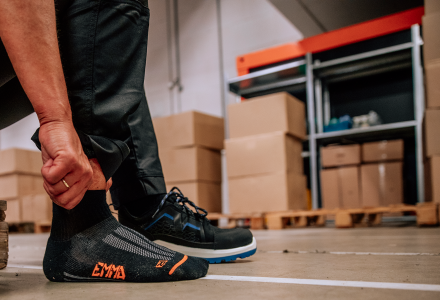
What many people underestimate is the role of work socks. Good work socks form the first layer between your foot and your shoe. They help wick away moisture and reduce friction. This helps prevent blisters and a burning sensation.
Think of work socks specifically developed for safety shoes, such as the Hydro-Dry® Working sock from EMMA. Some work socks also have antibacterial properties that help prevent odours and keep the sock fresh for longer.
Especially during long workdays, both indoors and outdoors, breathable and well-fitting work socks make a real difference. They will not solve everything, but they do provide an important foundation for comfort.
View all EMMA work socks here: Hydro-Dry® Sustainable socks
Extra support with insoles
Do your feet remain tired or sore, even when wearing good socks? Then additional support may be needed. Insoles provide cushioning and help distribute pressure more evenly across your foot. This makes walking and standing more comfortable.
It is important to choose insoles that are suitable for your safety shoes. Safety shoes are tested and certified as they are delivered. Therefore, always use insoles that fit properly or are approved by the manufacturer.
When are orthotic insoles needed?
Sometimes insoles for comfort and light support are not enough. If complaints persist, orthotic insoles may provide a solution. Orthotic insoles are intended for medical correction, for example in cases of abnormal foot alignment.
Signs that this may be necessary include:
- Persistent foot pain
- Pain in the knees, hips or lower back
- Clear and uneven wear of your shoes
In that case, advice from a specialist is important. A podiatrist or orthopaedic specialist can examine the problem and create custom orthotic insoles.
Want to learn more about this? Discover all EMMA insoles.
How to prevent sore feet
You prevent sore feet in safety shoes by looking at the complete picture. Not just the shoe itself, but everything that supports your foot.
In short:
- Wear good work socks that reduce moisture and friction
- Choose insoles that provide cushioning and support
- Seek additional help in case of persistent complaints
Also check regularly whether your safety shoes still provide sufficient support. Worn soles or shoes can reduce cushioning and stability.
With the right combination, you will work more comfortably and your feet will feel better for longer, without compromising on safety. Complete comfort.
 Print
Print